
Luca’s Happy Paw Highlights
A little collection of memorable moments from Happy Paw Adventure stay
Luca's Adventure Story
Luca's Vacation Highlights
❤️ Made close friends with Milo and Biglo.
🧩 Loved puzzle toys.
😊 Was affectionate and loved cuddles.
🥦 Discovered frozen broccoli.
🌞 Enjoyed relaxing in the yard after playtime.
Favorite Products
Click here to access the list of products.
Use Ctrl + F (Windows) or ⌘ + F (Mac) and search for your dog's name to quickly find products he personally enjoyed.
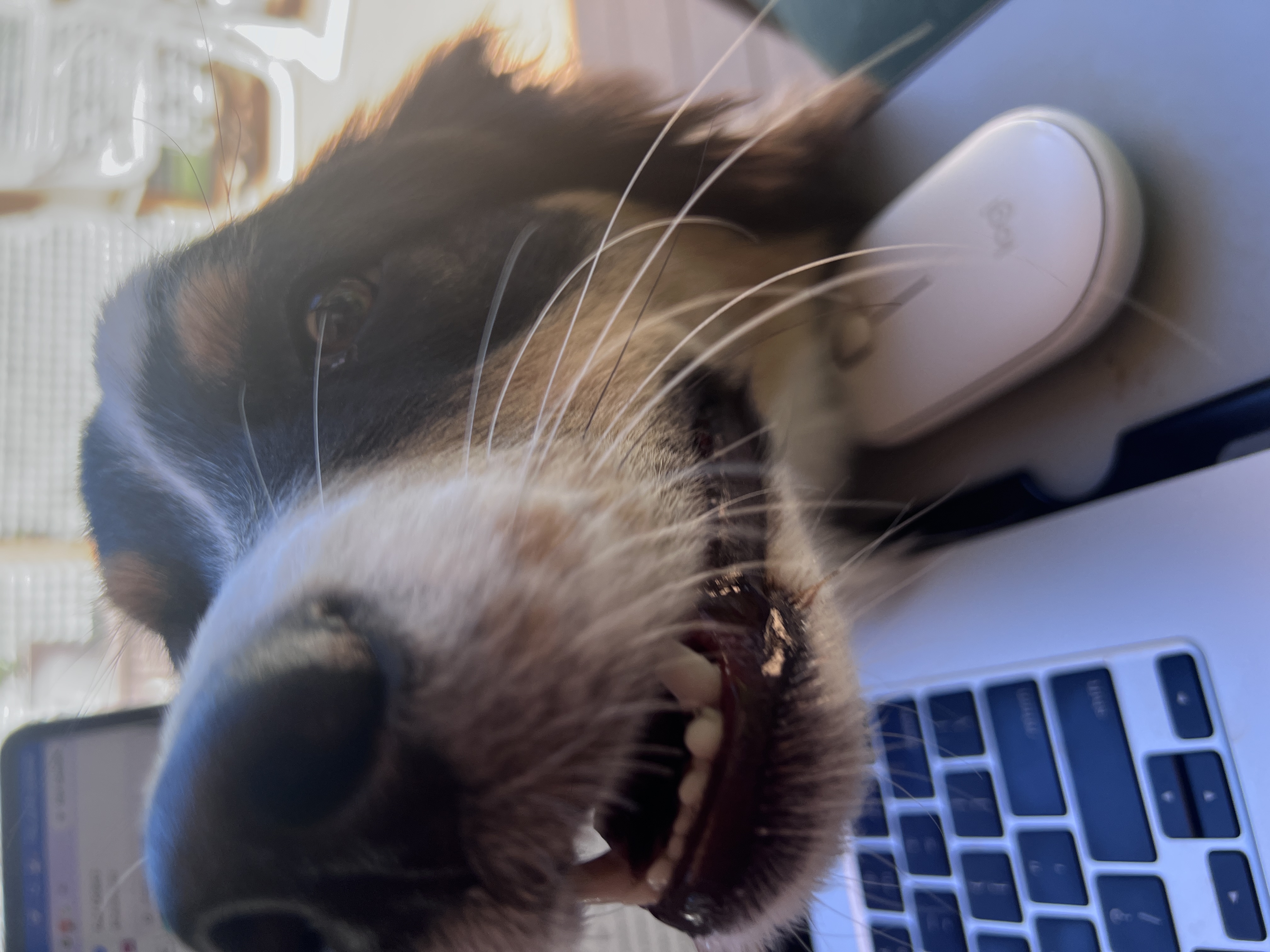
Luca also enjoyed crunchy frozen broccoli (I buy them in large bags at Costco)
Training & Recommendations
Happy Paw Adventure Insights
Below are my notes about the training we worked on during Luca's stay. I also recorded a few videos to show you some of the examples. I hope this helps you continue building on what we started.
First, a few general things that apply to all of the exercises.
The most important thing is to praise every positive reaction. As soon as Luca does something right, praise him. It doesn't have to be food every time. Praise, petting, cuddles, or a treat all work well with him. He is very food motivated, but he also really enjoys attention and affection.
Also, you don't always have to wait for a particular situation to happen before training him. Sometimes you can create that situation yourself. Barking is a little harder because we cannot easily create something that makes him bark on command, so that one is more situational. But commands like wait, quiet, or no jumping can easily be practiced many times throughout the day.
For example, if Luca has been whining and you didn't train him at that exact moment, but then he suddenly gets quiet for even a second, that is a perfect opportunity to reinforce the behavior.
Immediately tell him, "Quiet. Good job, Luca. Quiet. Good boy." This way he starts associating the word quiet with the behavior of stopping his whining. After many repetitions, he will begin to understand that when you say "quiet," you are asking him to stop making sounds, and that something good usually follows.
The same idea applies to many other commands. If he sits on his own, you can still tell him, "Sit. Good boy." You are simply helping him connect the word with the behavior he is already offering. Dogs learn these associations through many small repetitions, not through one or two training sessions.
Another thing I like to teach dogs is an "all done" command. Some people use it and some don't, but I find it very useful. It tells the dog that whatever you asked him to do is finished and he is free to go.
For example, if you ask Luca to sit, give him a treat, and then simply walk away, he may start deciding on his own when the exercise is over. Instead, after you finish, tell him "All done," and then release him. You can use it after training, after wiping his paws, after grooming, or after any other activity. Over time he learns that he should wait until you release him rather than deciding for himself.
Quiet
Quiet was probably the most important command we worked on because Luca likes to whine when he is excited or anticipating something, especially around food.
Food is a very strong motivator for him, so it became a great training opportunity. On one of the videos you will see that he is whining while waiting for his meal. I don't give him the food while he is whining because that would reward the behavior I don't want. Instead, I simply wait. At one point he almost stops whining, then starts again, so I continue waiting. The moment he really gets quiet, even if it is only for a second, I immediately give him the food and tell him, "Good job. Quiet. Good boy."
The goal at the beginning is not to expect him to stay quiet for a long time. Even a fraction of a second is enough. As he improves, you can slowly increase the amount of time he stays quiet before rewarding him.
You can practice this before meals, before giving him a chew, before opening the door, or before giving him attention. Eventually he starts thinking, "When they tell me quiet and I stop whining, good things happen."
Wait
We used wait constantly throughout the day because it teaches patience and impulse control.
We practiced it before meals, before treats, before going outside, before getting cuddles, and during many everyday situations.
Again, don't expect too much in the beginning. If he can wait for one second, that's great. Praise him. Next time ask for two seconds, then three. Little by little he will become more patient.
Food works especially well for this because he is so motivated by it.
The important thing is not the amount of time. The important thing is that he succeeds and enjoys the exercise.
No
I use "No" more as a marker than as a punishment. It simply tells Luca that whatever he is doing at that moment is not the behavior I want.
For example, if he starts doing something he shouldn't, I simply tell him, "No, Luca," and then redirect him to something appropriate. As soon as he makes a better choice, I immediately praise him.
I don't spend much time repeating "No." I would much rather tell him what I want him to do and then reward that behavior.
No Barking
Barking is a little harder to practice because it depends on outside triggers. We can't easily create those situations, so most of the work happens naturally.
Luca actually made very nice progress with barking during his stay. By the end, there were many situations where I expected him to bark, but he chose not to. Whenever that happened, I praised him even though he didn't actually bark. I wanted him to understand that choosing not to bark is exactly what I wanted.
When he did bark, I would tell him, "No barking, Luca," and try to redirect him with something else. Sometimes he would stop immediately, sometimes he would bark again 30 seconds later, especially if whatever triggered him was still there. That's perfectly normal. I simply repeated the same process.
The important part is what happens after he stops. As soon as he becomes quiet, I repeat the command again in a positive tone.
"No barking. Good job, Luca. No barking. Good boy."
I intentionally repeat the words several times while he is doing the correct behavior because I want him to associate those words with being calm and quiet.
Sometimes you will have more success than other times depending on what triggered him. Some noises are much more exciting than others. The important thing is simply being consistent.
Since he is still a puppy, this is a great time to reinforce this behavior. The more consistent everyone in the family is, the easier it will become for him.
No Jumping
Luca made amazing progress with this during his stay. When he first arrived, he jumped on me almost every time he got excited. Food, toys, going outside, seeing me in the morning, getting cuddles, getting attention, everything was exciting enough for him to jump. By the end of his stay, he rarely jumped anymore.
One thing that helped a lot was preparing him before exciting moments instead of waiting until he had already jumped. For example, in the morning I didn't simply open the crate. First I opened the blinds, turned off the white noise, did a few things around the room, and while doing that I already reminded him, "Quiet, Luca, quiet," because I knew he would start whining as soon as he realized I was about to let him out. Then, before opening the crate, I would also remind him, "No jumping."
This way I was giving him an opportunity to make the right choice before he became too excited. When I opened the crate and he kept all four paws on the floor, I immediately praised him. "No jumping. Good boy, Luca. Good job." Since he already knew what I expected from him, it became much easier for him to succeed.
If he did jump, my reaction was always the same. I simply turned my body away from him. I didn't push him away, didn't talk to him, and didn't give him attention, either positive or negative. If he walked around to face me again, I simply turned again. As soon as he settled down with all four paws on the floor, I immediately gave him attention, cuddles, praise, and sometimes a treat. He really enjoys affection, so that became a very powerful reward for him. By the end of his stay I honestly didn't have to turn away very often because he had already figured out what I wanted.
Crate
Luca also became much more comfortable with the crate during his stay. The idea here is simply to make the crate predict good things instead of feeling like the fun is over.
Usually I would throw a treat into the crate and let him go inside to get it. Once he was inside, I closed the door and immediately gave him another treat. Then I might continue putting my own dogs into their crates or doing something nearby, and after a little while I would give him another treat and tell him, "Crate. Good job."
You don't have to give multiple treats every time. One is perfectly fine. I just like doing it occasionally because it reinforces the idea that staying calmly in the crate can also lead to good things. Instead of thinking, "The door closed and all fun stopped," he starts thinking, "Maybe something else good is still coming."
That little shift in mindset makes a big difference over time.
Leave It
We didn't spend a lot of time on this command because I didn't want to overwhelm him with too many new things at once, but we practiced it whenever a natural opportunity came up.
For example, when he grabbed one of my sandals, became a little too interested in something on the floor, or stole a chew from the table, I would tell him, "Leave it," and immediately redirect him to something else. Sometimes it was another toy, sometimes a treat. As soon as he chose the new item or disengaged from the original one, I praised him. "Leave it. Good job, Luca. Good boy."
There is also another command, "Drop it," which is usually used when the dog already has something in his mouth. I intentionally didn't separate those two commands during this stay because we already had plenty of more important foundational behaviors to work on, and I didn't want to overload him with too many new words at once.
Once he becomes more fluent with the basics, you can always separate those commands later if you would like.
Catch
This one was mostly for fun, but it actually has a nice training purpose too. Luca is very good at catching treats in the air, and he absolutely enjoys it.
The nice thing about this game is that you can combine it with almost any other command. For example, you ask him to sit, then reward him with "Catch." Or you ask him to wait for a moment and then finish with "Catch." Because he enjoys it so much, the game itself becomes part of the reward.
I don't really use it as a command by itself. I mostly use it to make training more fun and to keep him engaged. He is still a puppy, and puppies learn best when they enjoy the process. Catch was simply another way to keep him excited about working together while reinforcing the other commands at the same time.
Final Thoughts
Overall, I really enjoyed working with Luca.
He is very food motivated, which makes training much easier, but even more importantly, he genuinely wants to do the right thing. He wants to interact with people, he enjoys learning, and he likes being praised when he succeeds.
Results at home may be a little different because dogs often have different habits in different environments. Some behaviors may already be well established at home and may take a little longer to change.
The most important thing is consistency. While he is still a puppy, this is the best time to reinforce these behaviors. The more consistently everyone in the family responds the same way, the more these new habits will simply become part of who he is.
Please let me know how things go over the next few weeks. I would love to hear what changes you notice and how his training progresses. I think he has a lot of potential, and with consistency he is going to become a wonderful adult dog.
Meet Our Team
passionate people behind happy pets
at pet grooming, our team is more than just groomers — we are animal lovers dedicated to creating a safe, stress-free, and caring experience. with expertise, patience, and compassion, our professionals ensure every pet feels comfortable, looks great, and leaves with a wagging tail.
Mira ellen
Senior pet groomer
Mira ellen
Pet care specialist
Mira ellen
Hygiene expert groomer
Planning Another Adventure?
From daycare to extended boarding, every stay is personalized to help your dog feel safe, relaxed, and right at home.

⭐ Dog Boarding
A personalized home vacation with comfortable overnight stays, play, relaxation, and routines tailored to your dog's personality and needs.
⭐ Doggy Daycare
A fun and relaxing day filled with play, socialization, and personal attention while you're at work or away for the day.
⭐ Additional Services
Pick up & drop off
Training
Marymoor Park Adventures
De-shedding
Nail Trimming5
25
Years of Experience
⭐⭐⭐⭐⭐
Star Sitter on Rover
🎓
x
Certified Trainer
25
Repeat Clients in 2026
Registered Washington Business • Fully Insured through Professional Pet Care Insurance (PCI)
Copyright 2026. Happy Paw Adventure Registered DBA of One Nonverbal Ecosystem LLC. All Rights Reserved.